

Ethically Sourced Hair Extensions: A 2026 Guide
Table of Contents
- What Defines Ethical Sourcing in Hair Extensions
- Temple Hair vs Non-Temple Hair: Understanding the Difference
- Virgin Hair vs Remy Hair Sourcing: What the Labels Actually Mean
- How to Verify Hair Extension Supply Chains and Donor Transparency
- Red Flags: What to Avoid When Buying Ethically Sourced Hair
- Why Ethically Sourced Extensions Cost More (And Why It Matters)
- Caring for Your Ethically Sourced Extensions to Maximize Value
- Conclusion
Last Updated: August 28, 2026
What Defines Ethical Sourcing in Hair Extensions
Ethically sourced hair extensions are human hair collected with documented donor consent, fair compensation, and transparent supply chain records from origin to finished product. This definition separates genuine ethical practices from marketing language.
The hair extension industry lacks universal certification standards. The term "ethically sourced" is legally unprotected, meaning brands can claim it without third-party verification. According to research on ethical sourcing practices in beauty, a 24% rise in ethically sourced hair usage was highlighted in the U.S. Human Hair Extension Market Outlook, yet many claims remain unverified.
Legitimate ethical sourcing requires three non-negotiable elements: documented donor consent, fair compensation for hair donors, and transparent supply chain documentation. Without these, a brand is using the term as marketing language rather than describing actual practice.
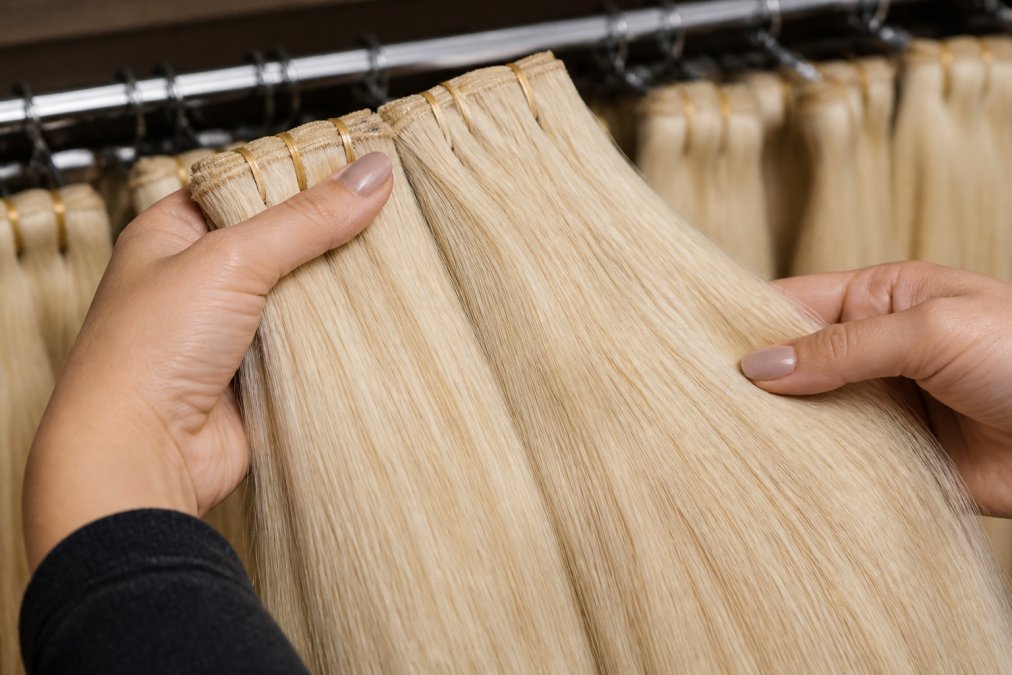
At Millionaire Beauty Brand Extensions, we prioritize these standards across our collection. Our 100% human hair extensions are sourced with attention to donor welfare and supply chain visibility. Ethically sourced hair exhibits superior cuticle alignment, longer wear life, and better styling performance than conventionally sourced alternatives.
According to consumer preference data on hair extension sourcing, 78% of hair extension customers prioritize brands with transparent sourcing practices. This has become a primary purchasing factor for the majority of buyers.
Temple Hair vs Non-Temple Hair: Understanding the Difference
Temple hair and non-temple hair represent two fundamentally different sourcing narratives, each with distinct implications for ethics, quality, and authenticity.
Temple hair comes from religious donations at temples, primarily in India. Women voluntarily donate their hair as a spiritual practice, and this hair is then collected, sorted, and sold through established channels. The sourcing narrative is traceable to a documented religious institution with specific geographic origin.
Non-temple hair encompasses all other sources: hair from salons, waste hair from haircuts, hair purchased from individual donors through brokers, or hair sourced through supply chains without temple documentation. This category is vastly larger and far more opaque.
The critical issue is deception. According to investigation into hair sourcing practices, many brands advertised as "ethical" cannot trace their hair back to the point of origin when probed. Global demand for temple hair far exceeds actual temple donations, creating incentive for fraud. Suppliers falsely label non-temple hair as temple-sourced because buyers pay premium prices for the traceable narrative.
Non-temple hair isn't inherently unethical. Hair from individual donors, salon waste, or ethical brokers can be sourced responsibly if the supply chain is transparent and donors are fairly compensated. The problem is verification. Without documented consent records and compensation documentation, non-temple hair sources are difficult to audit.
Virgin Hair vs Remy Hair Sourcing: What the Labels Actually Mean
These terms describe collection and processing methods, not sourcing ethics. Understanding the difference prevents confusion between quality grades and ethical standards.
Remy hair is human hair collected with cuticles all running in the same direction, cuticle to tip. This alignment is preserved during collection and processing. Remy hair tangles less, lasts longer, and holds color better because the cuticle structure remains intact.
Virgin hair means the hair has never been chemically processed. It hasn't been bleached, dyed, permed, or treated with harsh chemicals. Virgin hair retains its natural protein structure, making it more resilient and longer-lasting than processed hair.
The confusion arises because these terms are often marketed as proxies for ethics. A brand might claim "100% virgin Remy hair" to suggest ethical sourcing, but the labels say nothing about how the hair was collected, whether donors consented, or whether they were fairly compensated.
According to market research, the human hair extensions segment exhibited a leading market share of 57.32% in 2025, yet most consumers cannot distinguish between quality grades and actual ethical sourcing practices. Many conflate "human hair" with "ethically sourced."
Here's the practical distinction: Remy and virgin are quality indicators. Ethical sourcing is a practice indicator. A brand can sell virgin Remy hair that was collected unethically. Conversely, ethically sourced hair might be processed (not virgin) but still outperform cheaper alternatives because transparent supply chain practices mean better handling throughout production.
Millionaire Beauty Brand Extensions sources 100% human hair with attention to both quality grades and ethical collection. Our [hand-tied wefts, like the Hair Wefts Hand tied Color 60](https://millionairebeautybrandextensions.com/products/hair-wefts-hand-tied-color-60) ($512.00), are crafted to preserve cuticle alignment and natural texture.

How to Verify Hair Extension Supply Chains and Donor Transparency
Verification requires asking specific questions and demanding documented answers. Most brands cannot provide them.
Start by identifying what documentation should exist at each stage: where hair was collected, who collected it, what consent process was used, what compensation was provided, and which facilities processed the hair.
Step 1: Request origin documentation. Ask the brand: "Where does your hair come from geographically?" Ethical brands can name specific regions, temples, or communities. Vague answers like "India and China" are insufficient.
Step 2: Ask about donor consent protocols. How does the brand ensure donors understand what they're agreeing to? Ask: "What consent documentation do you maintain?" Legitimate brands have written protocols and can describe them specifically.
Step 3: Verify compensation claims. Ask: "What is the documented compensation per donor?" and "Can you provide records showing donors were paid?" Ethical brands maintain payment records and can discuss compensation ranges. natural hair care.
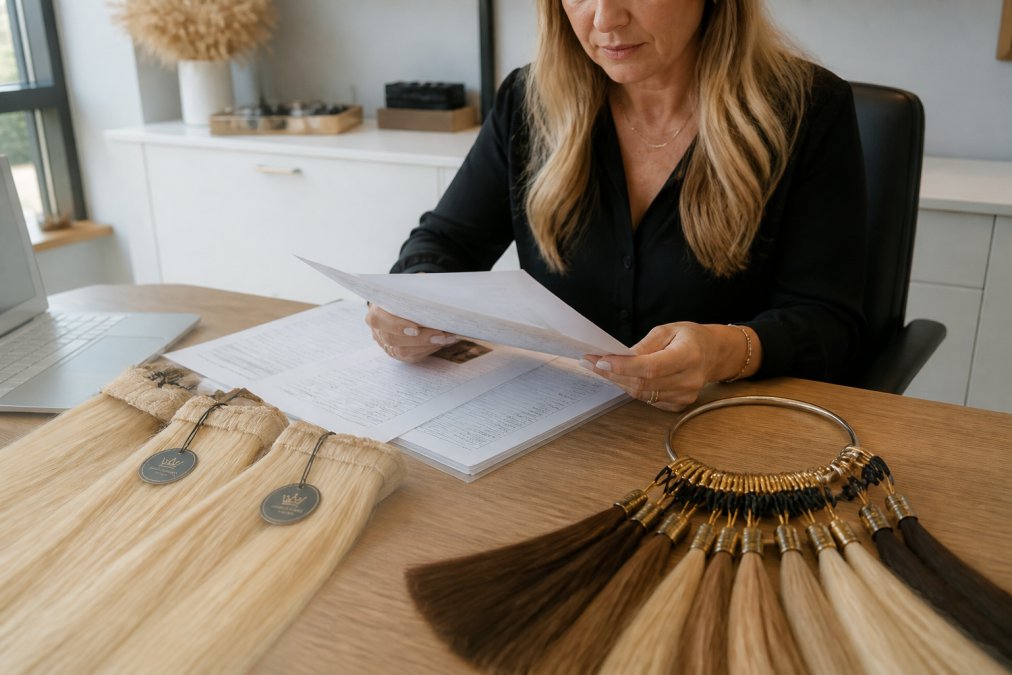
Step 4: Request supply chain audits. Ask: "Do you conduct third-party audits of your supply chain?" Brands serious about ethics invest in verification. Some use blockchain tracking to ensure all hair is ethically collected with donor consent.
Step 5: Check for facility standards. Ask about processing facilities: "What labor standards do your facilities maintain?" Ethical sourcing extends beyond donor consent to include safe working conditions for everyone handling the hair.
According to data on consumer priorities in hair extension purchasing, 55% of salons now offer sustainable or ethically sourced hair extensions. This shift reflects growing demand for verification.
| Verification Step | What to Ask | Red Flag If... |
|---|---|---|
| Origin | Where geographically does your hair come from? | Answer is vague (e.g., "Asia") or evasive |
| Consent | What documented consent protocols do you use? | Brand cannot describe specific consent process |
| Compensation | What is documented donor compensation? | Brand cannot name specific payment amounts |
| Audits | Do third-party audits verify your claims? | No audit results or external verification available |
| Facilities | What labor standards govern processing? | Facilities are not inspected or standards are unclear |
Red Flags: What to Avoid When Buying Ethically Sourced Hair
Certain patterns indicate a brand is using "ethical" as marketing language rather than describing actual practice.
Red flag #1: Vague sourcing claims. If a brand says "ethically sourced" without explaining what that means, walk away. Legitimate brands specify: temple donations, fair trade practices, direct donor relationships, or documented consent protocols.
Red flag #2: Unverifiable "transparency." Transparency requires documentation you can examine. If a brand claims transparency but cannot show consent records, payment documentation, or facility audit results, they're using the word without substance.
Red flag #3: Prices that seem too low. Ethically sourced hair costs more because donors are fairly compensated and supply chains are audited. If a brand claims ethical sourcing but prices match cheap alternatives, the claim is likely false.
Red flag #4: No information about labor practices. Ethical sourcing covers everyone in the chain: donors, collection workers, facility staff, and handlers. If a brand discusses donor compensation but says nothing about facility labor standards, they're only addressing part of the equation.
Red flag #5: Claims of "100% temple hair" without limits. Temple donations are finite. Global demand far exceeds actual temple supply. If a brand claims all their hair is temple-sourced, they're either lying or buying from suppliers who are.
Red flag #6: No third-party verification. Brands serious about ethics invest in external audits. If a brand makes ethical claims but has never been audited by an independent organization, they have no external accountability.
Red flag #7: Inability to name specific suppliers or facilities. Transparent brands can tell you which facilities process their hair and which communities donate. If a brand cannot name sources, they either don't know or don't want you to know.
According to investigation into hair sourcing practices, women are being deceived and robbed of something that often has emotional or cultural significance, for a fraction of its worth. This underscores why verification matters. Without documentation, you cannot know whether your purchase supports exploitation or ethical practice.
Why Ethically Sourced Extensions Cost More (And Why It Matters)
The price premium for ethically sourced hair reflects real costs that cheap alternatives externalize onto donors and workers.
Fair compensation for hair donors is the largest cost factor. When a brand pays donors fairly, that cost is built into the final price. Cheap hair extensions often cost less because donors receive minimal compensation. The margin goes to middlemen instead of the people whose hair is being sold.
Processing and quality control add cost. Ethical sourcing requires documented handling at every stage to preserve hair quality and maintain chain-of-custody records. Facilities that maintain labor standards and safety protocols cost more to operate.
Third-party auditing and verification are expensive. Brands serious about ethics invest in external audits costing thousands of dollars annually. Cheap brands skip this step entirely.
Supply chain transparency requires infrastructure. Blockchain tracking systems, detailed documentation, and regular supplier communication all cost money. Brands using opaque supply chains avoid these expenses.
Here's the counterintuitive part: ethically sourced extensions often provide better long-term value despite higher upfront cost. Ethically sourced hair extensions typically last 18-24 months with proper care, compared to cheaper alternatives that may need replacing every few months. Over two years, the ethically sourced option costs less per month of wear.
Millionaire Beauty Brand Extensions prices reflect this reality. [Our hand-tied wefts, like the Hair Wefts Hand tied Color 6](https://millionairebeautybrandextensions.com/products/hair-wefts-hand-tied-color-6) ($412.00), represent investment in quality that lasts. The cost structure reflects fair compensation for hair donors, rigorous quality control, and transparent sourcing practices.

The real question isn't "Why does ethical hair cost more?" but "Why does unethical hair cost so little?" The answer is that someone, usually the hair donor, is bearing the cost through unfair compensation or exploitative practices.
Caring for Your Ethically Sourced Extensions to Maximize Value
Proper care directly impacts how long your extensions last and whether you recoup the investment in quality sourcing.
Step 1: Wash with sulfate-free products. Sulfates strip natural oils and damage the cuticle structure. Use gentle, sulfate-free shampoo designed for extensions in cool water, never hot.
Step 2: Condition deeply and regularly. Extensions cannot absorb moisture from your scalp. Use deep conditioning treatments weekly, focusing on mid-lengths and ends.
Step 3: Minimize heat styling. While human hair can withstand heat, repeated high-temperature styling degrades the cuticle over time. Apply heat protectant spray first and use lower temperatures than you'd use on natural hair.
Step 4: Brush gently and frequently. Brush daily with a wide-tooth comb or extension brush, starting at the ends and working up. Never brush wet extensions.
Step 5: Sleep with protection. Sleep with extensions in a loose braid or use a silk pillowcase to reduce friction.
Step 6: Schedule regular maintenance. Maintenance appointments every 4-8 weeks keep extensions secure and prevent damage, extending wear life significantly.
Millionaire Beauty Brand Extensions includes in-house formulated hair and skin care essentials specifically designed to nourish extensions and maintain scalp health. The cost of proper care is minimal compared to the cost of replacement.
The hair extension industry is at an inflection point. Consumer demand for ethical sourcing is growing faster than brands can verify their claims. This creates opportunity for informed buyers to support brands that prioritize transparency and donor welfare.
Millionaire Beauty Brand Extensions offers 100% human hair extensions sourced with attention to donor consent, fair compensation, and supply chain transparency. Our collection includes professional-grade hand-tied wefts and comprehensive extension application tools, all backed by in-house formulated hair care products designed to maximize extension longevity. When you choose ethically sourced extensions from Millionaire Beauty Brand Extensions, you're investing in quality that lasts, supporting practices that respect hair donors, and joining the shift toward responsible beauty.

=== FAQ ANSWERS (audit these too, same rules) ===
[1] Q: What does 'ethically sourced' actually mean for human hair extensions? A: Ethically sourced hair extensions are made from human hair collected with documented donor consent, fair compensation paid to the donor, and transparent supply chain records from origin to finished product. The hair must be handled safely through processing facilities with proper labor standards. Without these specific elements, consent, compensation, and traceability, the term is marketing language rather than a verifiable standard. More than 5.2 million consumers purchase human hair extensions annually, and demand for verified ethical sourcing continues to rise as consumers become aware of exploitative practices in the industry.
[2] Q: How can I tell if human hair extensions are actually ethically sourced? A: Ask your supplier for documentation proving donor consent, fair compensation details, and the complete supply chain path from collection to your hands. Legitimate brands provide this information openly during consultations. Red flags include suppliers who cannot trace hair back to its origin, use vague language like 'ethically sourced' without proof, or refuse to answer questions about their sourcing practices. Look for brands that share sourcing details transparently and maintain regular communication with suppliers. A 2024 survey found that 78% of hair extension customers prioritize brands with transparent sourcing practices, yet many suppliers still cannot verify their claims when questioned.
[3] Q: What's the difference between temple hair and non-temple hair sourcing? A: Temple hair comes from religious donations, primarily in India, where women voluntarily offer their hair as part of a spiritual practice. This sourcing method offers unique traceability and a documented donation narrative. Non-temple hair comes from other sources, including salons, waste hair, or combed hair collected through various channels. Temple hair typically commands premium pricing because the donation process is documented and the hair quality remains intact through the sacred collection process. However, concerns exist about whether all temple donors fully understand the commercial value of their contribution. Both sources can be ethical when proper consent and compensation are verified.
[4] Q: Why do ethically sourced extensions cost 20-50% more than conventional options? A: The higher cost reflects fair compensation paid directly to donors, safe working conditions in processing facilities, rigorous quality control, and supply chain transparency. When hair is ethically sourced with donor consent and fair wages, every step of the supply chain costs more than shortcuts taken by cheaper suppliers. Ethically sourced extensions typically last 18-24 months with proper care, compared to cheaper alternatives that may need replacing every few months, making them better long-term value. Millionaire Beauty Brand Extensions hand-tied wefts start at $412, reflecting the premium quality and ethical standards built into every product.
[5] Q: What's the difference between virgin hair and remy hair sourcing? A: Virgin hair has never been chemically processed and retains its natural cuticle alignment, making it the highest quality option. Remy hair maintains cuticle-intact quality but may have undergone some processing. Both can be ethically or unethically sourced depending on how the hair was collected and handled. The sourcing method (how the hair was obtained) is separate from the hair type (virgin or remy). An ethically sourced virgin extension comes from a consenting donor whose hair was never chemically stripped, handled carefully through processing, and traced through a transparent supply chain. This combination of ethical sourcing plus virgin quality delivers hair that lasts longer and performs better.
[6] Q: Are there certifications or standards that guarantee ethical hair sourcing? A: As of 2026, there is no universal certification standard for the hair extension industry. This means the term 'ethically sourced' is legally unprotected and often misused as marketing language without verification. Some brands pursue B-Corp certification or work with fair trade organizations, but these are voluntary and not industry-wide requirements. Your best protection is asking for documentation: proof of donor consent, compensation records, facility labor standards, and supply chain traceability. Brands like Great Lengths have maintained ethical sourcing and traceability for over three decades and hold B-Corp certification, demonstrating that verified standards are possible even without industry-wide regulation.
[7] Q: How does the environmental impact of hair sourcing matter? A: The environmental impact includes water use in processing, chemical waste from non-ethical facilities, and transportation emissions across the supply chain. Ethical sourcing often involves cleaner processing methods that protect both the hair quality and the environment. Additionally, 73% of global consumers say they would change consumption habits to reduce environmental impact, making sustainable sourcing a purchasing priority. Ethically sourced extensions that last 18-24 months have lower environmental impact per wear than cheaper extensions requiring frequent replacement. Choosing ethically sourced hair aligns with both personal values and environmental responsibility.
[8] Q: What should I do if I suspect a brand's hair isn't actually ethically sourced? A: Request specific documentation: donor origin, compensation proof, facility certifications, and supply chain records. If the brand cannot provide this information or uses vague language, that's a red flag. Research independent investigations or reviews, Refinery29's 2024 investigation uncovered misleading practices by suppliers advertising as 'ethical' who couldn't trace hair to its origin when questioned. Share your concerns with the brand directly and consider reporting to consumer protection agencies if you believe false claims are being made. Support brands that welcome these questions and provide transparent answers, as this drives industry-wide accountability.
Frequently Asked Questions
What does 'ethically sourced' actually mean for human hair extensions?
Ethically sourced hair extensions are made from human hair collected with documented donor consent, fair compensation paid to the donor, and transparent supply chain records from origin to finished product. The hair must be handled safely through processing facilities with proper labor standards. Without these specific elements, consent, compensation, and traceability, the term is marketing language rather than a verifiable standard. More than 5.2 million consumers purchase human hair extensions annually, and demand for verified ethical sourcing continues to rise as consumers become aware of exploitative practices in the industry.
How can I tell if human hair extensions are actually ethically sourced?
Ask your supplier for documentation proving donor consent, fair compensation details, and the complete supply chain path from collection to your hands. Legitimate brands provide this information openly during consultations. Red flags include suppliers who cannot trace hair back to its origin, use vague language like 'ethically sourced' without proof, or refuse to answer questions about their sourcing practices. Look for brands that share sourcing details transparently and maintain regular communication with suppliers. A 2024 survey found that 78% of hair extension customers prioritize brands with transparent sourcing practices, yet many suppliers still cannot verify their claims when questioned.
What's the difference between temple hair and non-temple hair sourcing?
Temple hair comes from religious donations, primarily in India, where women voluntarily offer their hair as part of a spiritual practice. This sourcing method offers unique traceability and a documented donation narrative. Non-temple hair comes from other sources, including salons, waste hair, or combed hair collected through various channels. Temple hair typically commands premium pricing because the donation process is documented and the hair quality remains intact through the sacred collection process. However, concerns exist about whether all temple donors fully understand the commercial value of their contribution. Both sources can be ethical when proper consent and compensation are verified.
Why do ethically sourced extensions cost 20-50% more than conventional options?
The higher cost reflects fair compensation paid directly to donors, safe working conditions in processing facilities, rigorous quality control, and supply chain transparency. When hair is ethically sourced with donor consent and fair wages, every step of the supply chain costs more than shortcuts taken by cheaper suppliers. Ethically sourced extensions typically last 18-24 months with proper care, compared to cheaper alternatives that may need replacing every few months, making them better long-term value. Millionaire Beauty Brand Extensions hand-tied wefts start at $412, reflecting the premium quality and ethical standards built into every product.
What's the difference between virgin hair and remy hair sourcing?
Virgin hair has never been chemically processed and retains its natural cuticle alignment, making it the highest quality option. Remy hair maintains cuticle-intact quality but may have undergone some processing. Both can be ethically or unethically sourced depending on how the hair was collected and handled. The sourcing method (how the hair was obtained) is separate from the hair type (virgin or remy). An ethically sourced virgin extension comes from a consenting donor whose hair was never chemically stripped, handled carefully through processing, and traced through a transparent supply chain. This combination of ethical sourcing plus virgin quality delivers hair that lasts longer and performs better.
Are there certifications or standards that guarantee ethical hair sourcing?
As of 2026, there is no universal certification standard for the hair extension industry. This means the term 'ethically sourced' is legally unprotected and often misused as marketing language without verification. Some brands pursue B-Corp certification or work with fair trade organizations, but these are voluntary and not industry-wide requirements. Your best protection is asking for documentation: proof of donor consent, compensation records, facility labor standards, and supply chain traceability. Brands like Great Lengths have maintained ethical sourcing and traceability for over three decades and hold B-Corp certification, demonstrating that verified standards are possible even without industry-wide regulation.
How does the environmental impact of hair sourcing matter?
The environmental impact includes water use in processing, chemical waste from non-ethical facilities, and transportation emissions across the supply chain. Ethical sourcing often involves cleaner processing methods that protect both the hair quality and the environment. Additionally, 73% of global consumers say they would change consumption habits to reduce environmental impact, making sustainable sourcing a purchasing priority. Ethically sourced extensions that last 18-24 months have lower environmental impact per wear than cheaper extensions requiring frequent replacement. Choosing ethically sourced hair aligns with both personal values and environmental responsibility.
What should I do if I suspect a brand's hair isn't actually ethically sourced?
Request specific documentation: donor origin, compensation proof, facility certifications, and supply chain records. If the brand cannot provide this information or uses vague language, that's a red flag. Research independent investigations or reviews, Refinery29's 2024 investigation uncovered misleading practices by suppliers advertising as 'ethical' who couldn't trace hair to its origin when questioned. Share your concerns with the brand directly and consider reporting to consumer protection agencies if you believe false claims are being made. Support brands that welcome these questions and provide transparent answers, as this drives industry-wide accountability.
This article was written using GrandRanker