

Why Premium Hair Extensions Cost More in 2026
Table of Contents
- The Real Price Tag: What You're Actually Paying For
- Remy vs. Virgin Hair: Why Cuticle Alignment Changes Everything
- How Long Do Premium Hair Extensions Last? The Longevity Factor
- The Cost Per Wear Hair Extensions Calculation: A Smarter Way to Compare
- Hidden Costs: Maintenance, Labor, and Why Budget Hair Fails
- Ethical Sourcing and the 2026 Supply Chain Squeeze
- Best Professional Grade Hair Extensions 2026: What to Look For
- Is the Investment Worth It? Weighing Value Against Upfront Cost
- Frequently Asked Questions
Last Updated: September 6, 2026
The United States hair extension market is valued at roughly USD 800 million in 2026, and human hair products capture 57% of that share, according to Perfect Locks market size report. Yet the question most shoppers ask isn't about market size; it is why premium hair extensions cost more than the budget sets lining drugstore shelves. At Millionaire Beauty Brand Extensions, we have spent years sourcing and selling 100% human hair, and the honest answer is that you are not paying for a name. You are paying for raw material that behaves like real hair, cuticles aligned in one direction, and a construction that survives more than a few washes.
The gap in price reflects a genuine gap in engineering. Budget hair is often chemically stripped, which removes the cuticle and leaves strands prone to tangling and matting within weeks. Premium hair retains its cuticle, lasts up to a year, and costs less per day of wear. Below, we break down exactly where your money goes, how to calculate true value, and the 2026 supply chain pressures that have raised prices across the board.
The Real Price Tag: What You're Actually Paying For
Premium hair extensions are priced on raw material grade, processing method, and construction quality, not on brand markup. Human hair prices have climbed 30-50% on average recently due to tariff impacts, as documented by Jo Hearts Hair supply chain analysis, which means the base cost of quality strands has risen before a single weft is sewn.
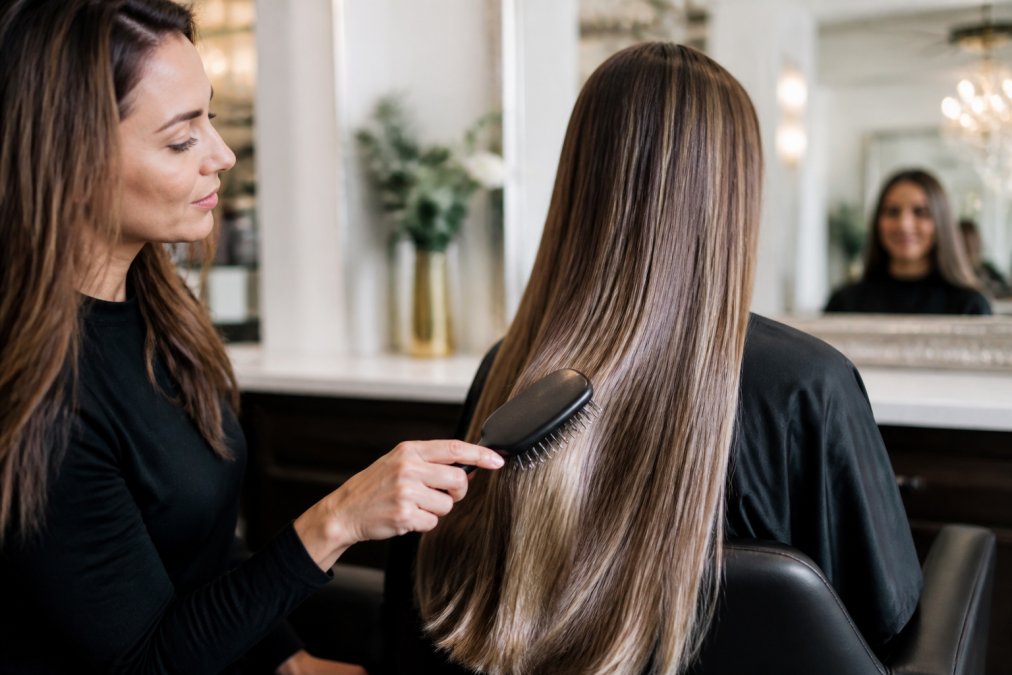
What you are paying for includes the donor sourcing network, sorting by length and texture, and the labor of aligning every cuticle. Cheaper sets skip these steps and the rigorous color processing that lets a set blend seamlessly with your natural shade. When you buy a $151 hot fusion weft or a $318 clip-in set from a professional line, you are funding a supply chain that rejects damaged or over-processed hair before it ever reaches you.

Remy vs. Virgin Hair: Why Cuticle Alignment Changes Everything
Remy hair is human hair collected with all cuticles aligned in the same direction, which prevents tangling and keeps the strand smooth from root to tip. Virgin hair is Remy hair that has never been chemically processed, dyed, or heat-treated, making it the highest grade available.
The cuticle is the outermost layer of each strand, and its alignment dictates how the hair behaves. When cuticles face mixed directions, they catch on each other, creating friction that leads to matting and shedding. Premium Remy hair, by contrast, maintains its smooth surface through repeated washing and heat styling, allowing you to curl, straighten, and color it just like your own hair.
The distinction matters most for daily wear. A luxury sheitel worn for religious observance needs hair that moves naturally and feels comfortable against the scalp for hours. Cuticle-aligned hair delivers that movement because each strand reflects light uniformly, producing a polished finish that reads as naturally healthy.
How Long Do Premium Hair Extensions Last? The Longevity Factor
Premium hair extensions last up to 365 days with proper care, while budget options typically fail within 60 days. This lifespan difference is the single largest driver of long-term cost, and it explains why professional-grade hair commands a higher upfront price.
Quality determines durability. High-grade extensions withstand the daily stress of brushing, washing, and styling without excessive shedding or loss of texture. Budget hair, often processed with harsh chemicals to strip color, loses its structural integrity quickly as the cuticle erodes, moisture retention drops, and strands become brittle.
The longevity factor also affects your maintenance routine. Premium hair holds its color and texture through multiple salon visits, meaning you replace it less often. For daily wearers, the difference between a 365-day lifespan and a 60-day lifespan is the difference between one purchase a year and six.
The Cost Per Wear Hair Extensions Calculation: A Smarter Way to Compare
The cost per wear hair extensions calculation divides the total price of the set by the number of days it remains wearable, shifting the conversation from sticker price to daily expense.
According to a Bombshell Extensions cost-per-wear analysis, premium extensions priced at $600 with a 365-day lifespan result in a daily cost of roughly $1.64. Budget extensions priced at $250 with a 60-day lifespan cost $4.17 per day. The premium set is 60% cheaper on a daily basis, even though it costs 140% more upfront.
| Hair Grade | Purchase Price | Lifespan | Daily Cost |
|---|---|---|---|
| Premium (Remy) | $600 | 365 days | $1.64/day |
| Budget (processed) | $250 | 60 days | $4.17/day |
The calculation is simple: divide the purchase price by the number of usable days. This framework, highlighted by Yummy Extensions on value metrics, helps you compare sets honestly rather than reacting to the initial price tag. The daily cost also accounts for how often you will need to replace the hair, which is where budget sets quietly drain your wallet.
Hidden Costs: Maintenance, Labor, and Why Budget Hair Fails
The purchase price is only the first payment. Professional installation, ongoing maintenance, and premature replacement add hundreds of dollars to any extension investment, and they hit budget hair buyers hardest. The real differentiator is the total cost of ownership over a 12-month cycle.
Installation Labor: The Same Fee, Different Frequency
Professional application is labor-intensive, and the fee is identical whether the hair is premium or budget. A typical hand-tied weft installation runs $300-$600, tape-in installation averages $200-$400, and keratin bond application runs $400-$800. These are one-time costs per install cycle, but budget hair forces you to repeat them far more often.

A premium set installed in January lasts through December with a move-up service every 6-8 weeks. A budget set installed in January often needs a full replacement by March, meaning you pay the full installation fee twice or three times per year instead of once. At $400 per installation, three installs cost $1,200 annually, before you buy a single weft.
The Maintenance Schedule Nobody Talks About
Premium hair follows a predictable maintenance rhythm:
- Weeks 1-6: No salon visit needed. Home care with sulfate-free shampoo and a boar-bristle brush.
- Week 6-8: Move-up or re-tightening appointment. Cost: $75-$150.
- Week 12-16: Deep conditioning treatment at the salon. Cost: $50-$100.
- Month 6: Mid-life color refresh if you color-treated the hair. Cost: $100-$200.
Budget hair disrupts this schedule. Because the cuticle is stripped or damaged, the hair absorbs moisture unevenly, leading to dry, brittle strands that tangle. You will find yourself booking emergency detangling appointments, buying silicone-based serums to mask the damage, and scheduling replacement consultations months earlier than planned. Budget hair buyers typically visit the salon 3-4 times more often than premium hair buyers over the same period.
The Specific Ways Budget Hair Fails
Budget hair fails through three distinct mechanisms that premium hair is engineered to resist:
- Cuticle erosion: Harsh chemical stripping removes the protective outer layer. Without it, the cortex swells when wet and shrinks when dry, causing the strand to weaken and snap at the midpoint, not at the root or tip where you might expect.
- Silicone coating breakdown: Many budget suppliers coat strands with silicone to create a false shine. This coating washes out after 3-5 shampoos, leaving the hair dull, rough, and prone to matting. You do not notice the failure immediately; it happens gradually over the first month.
- Weft construction failure: Budget wefts are often machine-sewn with a single thread pass. The weft frays at the edges within weeks, and individual strands shed from the seam. This shedding is not normal hair loss; it is structural failure of the weft itself.
The Health Cost: Traction Alopecia and Scalp Stress
When a cheap weft sheds excessively, the remaining strands pull unevenly on your roots. Over months, this uneven tension can cause traction alopecia, permanent hair loss at the hairline and crown. The American Academy of Dermatology identifies tight or heavy extensions as a leading cause of this condition. Budget hair also carries a higher risk of harboring bacteria or allergens due to less rigorous cleaning and sorting processes.
The Total Cost of Ownership Framework
To compare honestly, use this formula:
Total Annual Cost = (Set Price × Replacements per Year) + (Installation Fee × Install Cycles) + (Maintenance Visits × Visit Cost) + (Corrective Products × Annual Spend)
For premium hair: ($600 × 1) + ($400 × 1) + ($300 in move-ups) + ($150 in specialized shampoo and conditioner) = $1,450 per year.
For budget hair: ($250 × 4) + ($400 × 3) + ($600 in emergency detangling visits) + ($300 in silicone serums and repair masks) = $2,950 per year.
The budget option is more than double the cost. This is the hidden math that no drugstore label discloses, and it is the reason professional stylists steer clients toward premium grades even when the client's budget is tight.
Ethical Sourcing and the 2026 Supply Chain Squeeze
Premium Remy hair prices have risen sharply due to tightening global supply and surging demand from the fashion and beauty sectors, according to Persistence Market Research hair extensions analysis. This is not a temporary fluctuation. It reflects structural pressures on the raw material market that are reshaping how ethical suppliers operate.
Ethical sourcing means the hair is donated voluntarily, often by women in temples and rural communities who view hair as a renewable resource. These donors are compensated fairly, and the collected hair is sorted and graded by hand. This process is slower and more expensive than bulk collection, but it ensures the hair is healthy, unprocessed, and free from harsh chemical stripping.
The supply chain squeeze has made ethical sourcing more critical. As demand grows, the temptation to cut corners increases. Buyers who prioritize verified sourcing protect themselves from hair damaged by improper handling or disguised with silicone coatings that wash out after the first shampoo.
Best Professional Grade Hair Extensions 2026: What to Look For
The best professional grade hair extensions 2026 share five characteristics: 100% human hair with aligned cuticles, double-drawn density, a wide shade range, secure attachment methods, and verified ethical sourcing. The single most misunderstood specification, and the one that separates informed buyers from impulse buyers, is gram weight.
Why Gram Weight Determines Fullness and Price
Hair extensions are sold by weight, not by strand count or length alone. A standard full-head installation requires 100-150 grams of wefted hair for medium density, 150-200 grams for thick, voluminous results, and 80-100 grams for a natural, lightweight finish. The gram count dictates how full the hair looks when worn.
A 50-gram weft contains roughly half the strands of a 100-gram weft of the same length. The visual difference is dramatic: the 50-gram set will look wispy at the ends, lack body when curled, and fail to blend with thick natural hair, while the 100-gram set will hold its shape and move with a natural swing.
Premium suppliers are transparent about gram weight. A professional-grade weft typically weighs 50-60 grams per 4-inch-wide section. Budget suppliers often obscure this number, selling "20-inch wefts" without disclosing that each weft contains only 30 grams of hair. When comparing two sets at the same price, the one with higher gram weight per weft is the better value, regardless of brand name.
Double-Drawn vs. Single-Drawn: The Density Test
Double-drawn hair is thicker at the ends because shorter strands have been removed, creating a full, even hemline rather than a wispy taper. Single-drawn hair is thinner at the ends and looks less natural in a ponytail or updo. The distinction is visible in a simple test: hold a weft vertically and run your fingers from root to tip. Double-drawn hair feels consistent in thickness; single-drawn hair thins noticeably toward the ends.
Most budget sets are single-drawn because the sorting process is cheaper and faster. Double-drawn hair requires additional labor to sort strands by length, adding $50-$150 to the cost of a full set. For anyone who wears ponytails, braids, or updos, double-drawn hair is non-negotiable, the taper of single-drawn hair is immediately visible.
The Shade Matching Problem
A 40-shade range sounds comprehensive, but professional color matching requires more than a broad palette. The best lines offer shades that account for undertones, warm, cool, and neutral, as well as dimensional color that mimics natural highlights and lowlights.
When evaluating a set, ask whether the supplier offers:
- Rooted shades that blend with your natural regrowth
- Balayage or ombre options for dimensional color
- Custom color matching for unusual shades like silver, platinum, or vivid fashion colors
Premium suppliers typically provide free color swatches or virtual consultations. Budget suppliers rely on stock photos that are often edited to look richer than the actual product. A swatch test under natural daylight is the only reliable way to verify a match.
Attachment Methods: Matching the System to Your Hair
Professional-grade hair is available in several attachment systems, and the right choice depends on your natural hair density and lifestyle:
- Hand-tied wefts: Sewn onto braided tracks. Best for medium to thick hair. Lasts 8-12 weeks between move-ups. Cost per install: $300-$600.
- Tape-ins: Sandwich a thin weft between two layers of natural hair. Best for fine to medium hair. Lasts 6-8 weeks. Cost per install: $200-$400.
- Keratin bonds: Individual strands attached with keratin adhesive. Best for thin hair or partial volume. Lasts 3-4 months. Cost per install: $400-$800.
- Clip-ins: No adhesive or sewing. Best for occasional wear. Instant application and removal.
Premium suppliers offer all four systems because no single method works for every head of hair. Budget lines typically offer only clip-ins or low-quality tape-ins that pull on fine hair and cause breakage.
The Verification Checklist
Before purchasing, demand documentation:
- Gram weight per weft, ask for the exact number, not a range.
- Cuticle direction, confirm the hair is Remy-grade with all cuticles aligned.
- Processing history, virgin hair has never been chemically treated; Remy hair may be colored but retains its cuticle.
- Sourcing certification, verify that the hair was ethically donated and fairly compensated.
- Return policy, a reputable supplier stands behind the product with a 30-day guarantee.
Millionaire Beauty Brand Extensions meets these criteria with hand-tied wefts crafted from 100% premium human hair, offering the seamless volume and natural movement that professional stylists demand. Our collection spans over 40 shades for precise color matching, and our attachment systems, including hand-tied wefts, clips, tape-ins, and hot fusion, are designed for secure, comfortable wear. For a full-volume set, the Hand-Tied Weft in Color 60 delivers luxury density, while the Clip-In Set in Color 1 offers instant transformation without commitment.
Is the Investment Worth It? Weighing Value Against Upfront Cost
Premium hair extensions are worth the investment for anyone who wears them regularly, styles them with heat, or expects them to blend seamlessly with natural hair. The cost per wear calculation settles the debate for daily wearers, but the high initial outlay remains a genuine barrier for many buyers, as noted in On The Avenue Waco pricing analysis.
For occasional wear, a quality clip-in set offers flexibility without the commitment of a full installation. For daily wear, whether for religious observance or professional styling, hand-tied wefts or tape-ins provide the durability and natural movement that justify the premium. The decision comes down to frequency of use and your tolerance for replacement cycles.
The real risk is not overpaying for quality; it is underpaying for hair that fails, tangles, and damages your natural strands. A $600 set that lasts a year and looks flawless is a better value than a $250 set that looks worn after a month. When you factor in the cost of your time, salon visits, and the health of your hair, the premium option is the rational choice for most women.
Choosing premium hair extensions is a decision about how you value your time, your appearance, and the long-term health of your natural hair. The upfront cost is higher, but the daily cost is lower, and the confidence that comes from hair that moves, shines, and blends seamlessly is difficult to price. Millionaire Beauty Brand Extensions offers professional-grade wefts, clips, and individual extensions crafted from 100% human hair, with over 40 shades for exact color matching and same-day shipping for orders placed before noon. Get started with Millionaire Beauty Brand Extensions and invest in hair that performs as beautifully as it looks.
Frequently Asked Questions
What is a reasonable price for premium hair extensions?
A reasonable price depends on the type and quality. Professional-grade wefts or tape-ins from a trusted brand typically range from $145 to over $500 per set. For instance, our Tape in extensions start at $145.76, while our luxury Hand-Tied wefts are $512.00. This price reflects 100% human hair with intact cuticles, which directly impacts how natural it looks and how long it lasts. Cheaper options exist, but they often require replacement much sooner.
Why is the cost per wear hair extensions calculation better than comparing upfront prices?
The cost per wear calculation shows the true value over time. For example, a $600 premium set lasting 365 days costs about $1.64 per day. A $250 budget set lasting only 60 days costs $4.17 per day. This means the premium option is roughly 60% cheaper in the long run. When you assess hair extensions, divide the total price by the number of days you can wear them to see which investment actually saves you money.
How long do premium hair extensions last compared to budget ones?
Premium, professional-grade hair extensions can last up to 365 days or more with proper care, because the cuticles are aligned and the hair is less processed. Budget extensions often last only 60 days before they start tangling, shedding, or matting. The longevity depends on hair quality, how well it matches your texture, and your maintenance routine. Investing in higher quality hair reduces replacement frequency and protects your scalp from the stress of constant re-installations.
What makes professional-grade hair extensions worth the higher upfront cost?
Professional-grade extensions are worth it because they look natural, feel soft, and hold a style without frizzing. They are made from ethically sourced, 100% human hair with aligned cuticles, which prevents the tangling and shedding common with low-grade hair. They also withstand heat styling and coloring. While the upfront cost is higher, the cost per wear is lower, and you avoid the frustration and scalp irritation that often come with cheaper, chemically processed alternatives.