

Best Human Hair for Hair Loss: 2026 Guide
Table of Contents
- Types of Hair Loss and What Coverage Each Needs
- Remy Human Hair vs. Synthetic Hair for Hair Loss
- Best Human Hair for Hair Loss: Toppers, Extensions, and Wigs Compared
- Clip-In vs. Tape-In Extensions for Thinning Hair
- Best Hair Extensions for Fine Hair: What to Look For
- Scalp Health for Hair Extensions: Breathability and Long-Term Wear
- How to Maintain Human Hair Extensions for Maximum Longevity
- Conclusion
Last Updated: August 24, 2026
Finding the best human hair for hair loss is harder than it looks. The market is flooded with options that promise a natural finish but deliver tangling, shedding, and a look that fools nobody past arm's length. At Millionaire Beauty Brand Extensions, we work with women navigating thinning hair every day. This guide cuts through the noise and covers every major solution category, the criteria that actually matter, and the mistakes most buyers make before they find something that works.
Types of Hair Loss and What Coverage Each Needs
Hair loss is not a single condition, and the right coverage solution depends entirely on the pattern you're dealing with. Choosing a hair topper designed for crown thinning when you're experiencing diffuse loss across the entire scalp is one of the most common, and costly, mistakes buyers make.
Diffuse Thinning vs. Concentrated Crown Loss
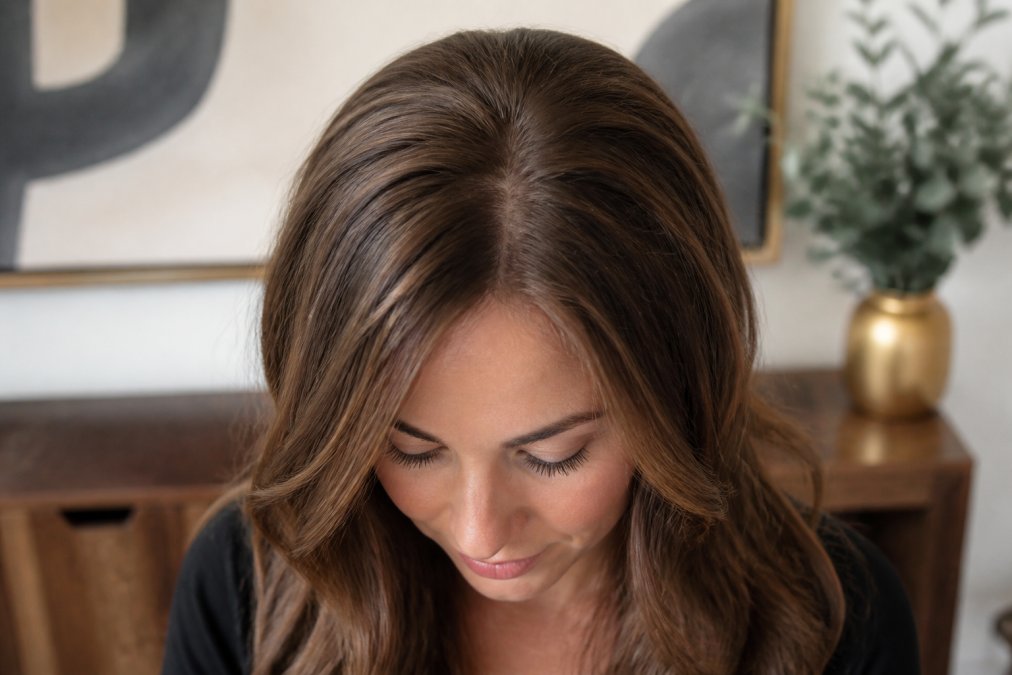
Diffuse thinning is generalized reduction in hair density across the whole scalp. The part doesn't widen dramatically in one spot; instead, overall volume drops and the scalp becomes increasingly visible under light. This pattern responds best to lightweight clip-in extensions or a large-base topper that covers a broader area.
Concentrated crown loss is thinning concentrated at the top of the head, often with a widening part. A targeted hair topper with a smaller base footprint works well here because it sits precisely over the affected zone without adding unnecessary bulk elsewhere.
Alopecia and Medical Hair Loss: When to Consider a Full Wig
Alopecia, whether alopecia areata, totalis, or universalis, creates different needs. Patchy loss from alopecia areata can sometimes be covered with a well-placed topper, but unpredictable progression makes that a temporary fix. For more advanced alopecia or chemotherapy-related hair loss, a full non-surgical hair replacement system is the more reliable solution.
According to the American Academy of Dermatology's guidance on hair loss, alopecia areata affects roughly 6.8 million people in the United States, and medical-grade hair replacement is one of the most recommended non-pharmacological approaches for managing its cosmetic effects. A full wig with a monofilament or silk base offers the most complete scalp coverage and the most convincing natural parting.
Remy Human Hair vs. Synthetic Hair for Hair Loss
Remy human hair is the only category worth serious consideration for daily wear. Synthetic fiber cannot be heat-styled, doesn't move the same way, and degrades faster under everyday friction. For someone dealing with thinning hair who already feels self-conscious, a synthetic piece that looks "off" in certain lighting is not a confidence builder.
Why Hair Cuticle Alignment Matters for Thinning Hair
Remy hair is human hair collected so that all cuticles run in the same direction, root to tip. This prevents tangling. When cuticles are misaligned, which happens with non-Remy human hair that's been chemically treated to hide the problem, the strands catch on each other, mat, and shed.
For women with thinning hair, this matters more than it does for someone adding a few clip-ins for volume. A topper sits on the head for hours. Friction is constant. Hair with aligned cuticles handles that friction without matting; non-Remy hair doesn't survive the same conditions for long. The hair cuticle is also what gives Remy hair its natural sheen. Chemically stripped hair reflects light differently and more plastic-looking, which makes integration between the piece and bio-hair harder to achieve convincingly.
Best Human Hair for Hair Loss: Toppers, Extensions, and Wigs Compared
The three primary categories for the best human hair for hair loss each serve a different coverage need and lifestyle.
| Solution | Coverage Area | Commitment Level | Best For |
|---|---|---|---|
| Hair Topper | Crown / part line | Low, clip-in, removable | Early to moderate thinning |
| Full Wig | Entire scalp | Medium, daily wear system | Advanced loss, alopecia |
| Clip-in Extensions | Sides, back, length | Very low, daily on/off | Volume, not scalp coverage |
| Tape-in Extensions | Sides, back, length | High, 6-8 weeks | Fine hair needing body |
Hair Toppers: Targeted Scalp Coverage Without Full Commitment
A hair topper is a partial hairpiece that clips onto existing hair to cover a specific area, most commonly the crown or widening part. It's the most popular first step for women experiencing early to moderate thinning because it doesn't require shaving or committing to a full wig system.
The base construction determines how natural the topper looks. A monofilament base has individual hairs hand-tied to a sheer mesh, which allows the scalp color to show through and creates the appearance of hair growing directly from the skin. A silk base adds a second layer beneath the monofilament that completely conceals the knots, producing the most undetectable part line available. Clip-in attachment via pressure-sensitive clips is the standard method, anchoring to surrounding bio-hair.
Full Wigs: Maximum Coverage for Advanced Hair Loss
Full wigs offer complete scalp coverage and are the right choice for advanced alopecia, chemotherapy-related hair loss, or any condition where remaining bio-hair cannot support a partial piece.
The best full wigs for hair loss use hand-tied, double-layer cap construction with a lace front for a seamless, undetectable hairline. A non-slip poly perimeter or medical-grade adhesive strip keeps the wig secure without bonding agents that can irritate a sensitive scalp. Hair density matters here. A wig that's too dense for the wearer's natural hair density looks immediately artificial. Most quality human hair wigs for thinning hair are built at a lighter density specifically to mimic natural hair volume.
Clip-In vs. Tape-In Extensions for Thinning Hair
The debate between clip-in and tape-in extensions for thinning hair comes down to one variable: how much tension your scalp can tolerate.
Clip-in extensions are the lower-commitment option. They go on in minutes, come off at night, and put no permanent stress on the hair follicle. For someone with fine or thinning hair who wants volume without long-term attachment, clip-ins are the practical choice. The caveat: the clips need existing hair to grip, and on very fine hair, poorly placed clips can create visible bumps or traction stress at the attachment points.
Tape-in extensions use medical-grade adhesive strips that sandwich a thin section of natural hair between two wefts. They lie completely flat against the scalp, making them the most discreet option for fine hair. The limitation for thinning hair is that adhesive removal, done improperly, can cause additional shedding.
For most women with thinning hair, clip-ins offer the better risk profile.
Best Hair Extensions for Fine Hair: What to Look For
The best hair extensions for fine hair aren't necessarily the most voluminous ones, they're the ones that add body without overwhelming the natural hair they're attached to.
Weight is the first filter. Heavy wefts pull on fine hair follicles and accelerate breakage. Look for lightweight Remy wefts specifically engineered for fine or thinning hair, with lower hair density per weft than standard extensions.
Base Type, Hair Density, and Weight Considerations
For toppers worn by women with fine hair, a monofilament base is almost always the right call. It's lighter than a silk base, breathes better, and doesn't add bulk at the scalp. Hair density on a topper should match the density of the surrounding bio-hair. A medium-density topper on very fine hair looks like a toupee.
Color Matching and Blending Techniques for a Natural Finish
Color matching is where most hairpiece purchases succeed or fail. A technically perfect topper with a slightly wrong color reads as fake immediately.
The most common mistake is matching to the ends of natural hair rather than the roots. Hair color is almost always darker at the root and lighter toward the tip. A topper that matches the mid-shaft to tip color will look too light at the scalp, creating a visible demarcation line.
Match the topper's root color to your natural root color, then select a piece with built-in highlights or lowlights that approximate your natural mid-shaft and tip variation. For women whose natural hair has warm undertones, look for shades described as "golden blonde," "honey blonde," or "warm chestnut" rather than "ash" tones, which read cool and flat against warm bio-hair.
Scalp Health for Hair Extensions: Breathability and Long-Term Wear
Scalp health is the angle most buying guides skip entirely. It's also the reason many women abandon otherwise good hair systems after a few months.
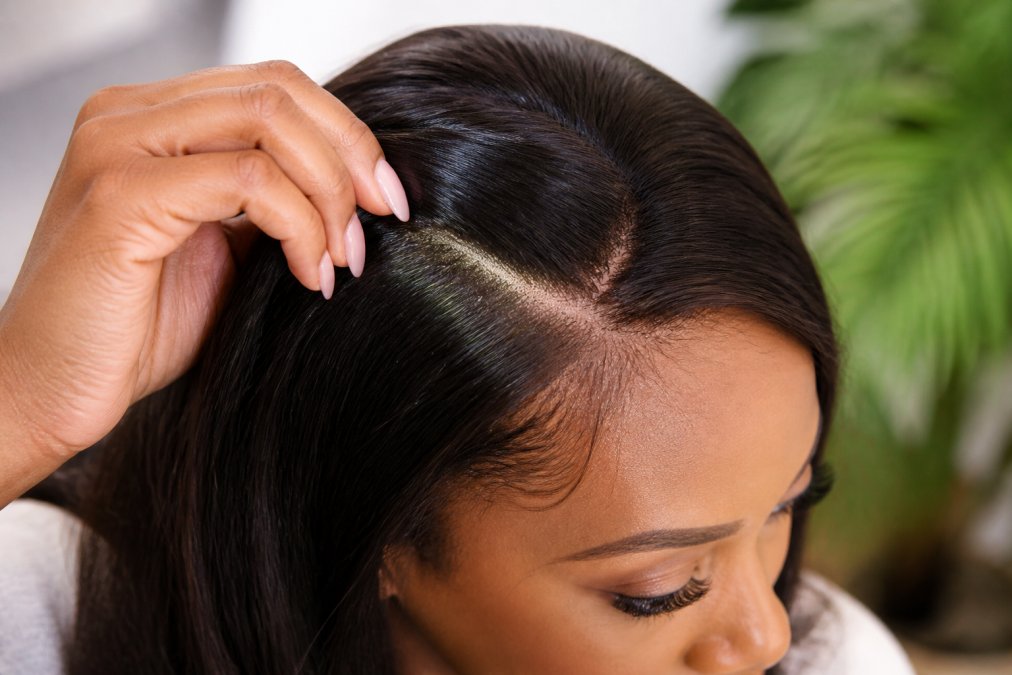
A hairpiece or topper that traps heat and moisture against the scalp creates conditions for irritation, folliculitis, and accelerated hair shedding in the areas where the piece sits. For women already managing thinning hair, this is a serious concern.
Hair breathability depends primarily on base construction. Monofilament and lace bases allow air circulation through the mesh. Solid polymer or thick wefted bases do not. According to guidance from the American Academy of Dermatology on scalp conditions, prolonged occlusion of the scalp can contribute to contact dermatitis and follicular irritation, both of which worsen hair loss over time.
The practical checklist for breathable long-term wear:
- Monofilament or lace base construction
- Lightweight attachment method (clip-in or minimal adhesive)
- Daily removal when possible to allow scalp ventilation
- Regular scalp cleansing with a gentle, non-stripping formula
How to Maintain Human Hair Extensions for Maximum Longevity
Human hair extensions require more care than synthetic alternatives, but they reward that care with a lifespan that makes the investment worthwhile. The difference between a set that lasts eight months and one that lasts two years is almost entirely maintenance.
Daily Hair Care Routine to Minimize Shedding and Tangling
The biggest causes of premature shedding in human hair extensions are mechanical friction and improper detangling. Both are preventable.
Daily routine for extension wearers:
- Detangle with a wide-tooth comb or loop brush before washing, starting at the ends and working upward
- Wash with a sulfate-free, moisturizing shampoo; sulfates strip the cuticle and accelerate tangling
- Apply conditioner from mid-shaft to ends only; conditioner at the bond or clip attachment point weakens adhesion
- Air-dry when possible; heat from blow-dryers degrades the cuticle faster than any other factor
- Braid or loosely tie extensions before sleep to prevent friction matting
- Apply a lightweight leave-in conditioner or hair oil to ends daily to maintain moisture and prevent splitting
Treat the extensions as you would your best natural hair. As noted in hair care guidance from the American Hair Loss Association, preserving the integrity of existing hair while wearing supplemental hair systems is critical for women managing active thinning.
Long-Term Cost-of-Ownership: What Quality Hair Actually Costs You
The upfront cost of quality Remy human hair is higher than synthetic or non-Remy alternatives. The long-term math usually reverses that equation.
A low-cost synthetic topper may need replacement every three to six months. A quality Remy human hair topper, properly maintained, typically lasts one to two years or longer. The per-month cost of the premium option often comes out lower, and the daily experience is incomparably better.
| Factor | Low-Cost Option | Quality Remy Human Hair |
|---|---|---|
| Replacement frequency | Every 3-6 months | Every 12-24 months |
| Heat styling capability | None (synthetic) | Full (wash, curl, straighten) |
| Color customization | Limited | Professional coloring possible |
| Maintenance cost | Low | Moderate (quality products) |
| Total value over 2 years | Higher (multiple replacements) | Lower per month |
The hidden cost most buyers don't calculate: the time and emotional cost of replacing a hairpiece repeatedly. For women managing hair loss, finding a system that works and having it fail after four months is genuinely disruptive. Quality hair, maintained correctly, removes that variable.
Millionaire Beauty Brand Extensions offers professional-grade extensions designed for longevity, 100% human hair with in-house formulated care products that work specifically with the hair's cuticle structure to extend wear life. For additional context on evaluating hair quality and sourcing standards, the Professional Beauty Association's standards for human hair products offers a useful framework for understanding what separates ethically sourced Remy hair from lower-grade alternatives.
The real challenge with hair loss isn't finding a product, it's finding the right system for your specific pattern, lifestyle, and scalp health needs. Millionaire Beauty Brand Extensions was built for exactly this: 100% Remy human hair in 40+ shades, professional-grade wefts and toppers with breathable base construction, and in-house formulated care products that protect your investment from day one. Get started with Millionaire Beauty Brand Extensions and find a solution that works as hard on day 300 as it does on day one.
Frequently Asked Questions
Q: What type of hair extensions are best for thinning hair?
A: Hair toppers and clip-in extensions made from 100% Remy human hair are generally the safest starting point for thinning hair. Toppers provide targeted scalp coverage at the crown or part line without requiring you to commit to a full wig. Clip-ins add volume without permanent adhesive or tension. For more advanced thinning, a monofilament or silk base wig distributes weight evenly and reduces pressure on fragile bio-hair. The right choice depends on where your thinning is concentrated and how much existing hair you have to anchor attachments.
Q: What is the difference between Remy human hair and synthetic hair for hair loss?
A: Remy human hair keeps all cuticles aligned in the same direction, which prevents tangling, allows heat styling, and produces natural movement that blends with your own hair. Synthetic hair uses manufactured fibers that cannot be heat-styled at normal temperatures and tend to look less natural under direct light. For hair loss specifically, Remy hair is the preferred choice because it can be colored, cut, and styled to match your exact hair texture and parting pattern, factors that matter most when blending a hairpiece with thinning bio-hair.
Q: Can human hair extensions damage thinning hair?
A: They can if the attachment method is wrong for your hair density. Tape-in extensions require sufficient hair to sandwich the adhesive strip, on very fine or fragile hair, improper installation causes breakage at the attachment point. Micro-ring and fusion bonds add weight that can stress weakened follicles. Clip-ins and clipless toppers carry the lowest risk because they distribute weight across a wider area and are removed nightly. Maintaining scalp health for hair extensions means spacing attachment points, avoiding tight tension, and giving your scalp recovery time between wears.
Q: How do I choose the right color and texture for hair loss solutions?
A: Start by matching your natural hair color at the mid-shaft, not the root, roots are often darker and will grow in regardless. Look for a supplier offering 40 or more shades, including options with warm or cool undertones, so you can find an exact match rather than settling for the closest approximate shade. For texture, hold a small sample next to your own hair in natural light. The extension should reflect light the same way. If your hair is fine and straight, avoid extensions with added body or wave, the contrast in texture will make the hairpiece visible.
Q: How long do high-quality human hair extensions last?
A: With consistent care, high-quality Remy human hair extensions typically last 12 to 18 months for clip-ins and toppers. Tape-in extensions are generally repositioned every 6 to 8 weeks, with the hair itself reusable for several rounds of application. Hair longevity depends heavily on your hair care routine: sulfate-free shampoo, weekly deep conditioning, heat protectant before styling, and proper storage all extend the lifespan significantly. Cheaper hair with misaligned cuticles will tangle and mat within months regardless of how well you care for it.
Q: Are there specific hair extension methods safer for sensitive scalps?
A: Yes. For sensitive scalps, clipless toppers and clip-in extensions are the most comfortable options because they avoid adhesives, heat bonds, and tight braiding. A monofilament or silk base distributes pressure evenly and reduces friction against the scalp. Breathable cap constructions with ventilation panels prevent heat buildup that causes itching and irritation during long wear. If you have alopecia or are undergoing medical treatment, look for hairpieces specifically designed with soft, hypoallergenic base materials and adjustable sizing to accommodate scalp sensitivity.
This article was written using GrandRanker