

How to Style Hair Extensions in a High Ponytail
Table of Contents
- Prep Your Natural Hair for a Secure High Ponytail
- How to Hide Wefts in a High Ponytail for a Seamless Look
- Step-by-Step: Styling Hair Extensions High Ponytail
- Best Hair Ties for Extensions That Prevent Damage
- How to Prevent Hair Extension Tangling After Styling
- Troubleshooting: Visible Tracks, Slipping, and Tension
- Conclusion: Rock Your High Pony with Confidence
- Frequently Asked Questions
Last Updated: September 8, 2026
A high ponytail is one of the most requested styles for clients wearing extensions, yet it is also where many installations fail. The challenge isn't the ponytail itself; it is hiding the wefts, managing tension, and creating a seamless blend that survives a full day. This guide from Millionaire Beauty Brand Extensions walks you through styling hair extensions high ponytail so the result looks intentional and feels secure.
The industry shift for 2026 is clear: protective styling with extensions is no longer a trend but a standard practice. Industry sources highlight that 2026 natural hair trend reports emphasize using extensions to maintain natural hair health while achieving modern looks. The key is that a high ponytail should never compromise your natural hair. Experts consistently stress that extensions should not cause pain, and scalp health remains the primary consideration regardless of the styling method chosen (Robin's To Go, 2024). Below, we break down the exact process, the tools that prevent damage, and the mistakes that cause visible tracks and slipping.
Prep Your Natural Hair for a Secure High Ponytail
The foundation of any convincing high ponytail is a clean, smooth base. Start with freshly washed hair that is completely dry. Damp hair stretches up to 30% more than dry hair, which means a ponytail secured on damp strands will loosen as the hair contracts, causing slipping within hours. Blow-dry thoroughly, then apply a lightweight styling cream or mousse from root to tip. Look for products containing polymers like PVP or VP/VA copolymer, these create a micro-grip on the cuticle that prevents the ponytail from sliding without the stiffness of a gel.
Before pulling the hair up, use a boar-bristle brush to smooth the hair back tightly. You want the hair snug against the scalp, but you should never feel pulling at the hairline. The American Academy of Dermatology explicitly warns that tight hairstyles, including high ponytails, can cause traction alopecia, a form of hair loss that is reversible only if caught early. For clients with thinning hair or delicate edges, the protocol changes entirely:
- Skip the tight elastic entirely. Use a soft velvet scrunchie or a silk-covered spiral tie that grips without cinching.
- Apply a edge-control or scalp serum containing castor oil or peppermint oil to the hairline before styling. This lubricates the follicle and reduces friction at the root.
- Rotate the ponytail position between the crown and slightly lower (mid-occipital) on alternate wears. Constant tension at the exact same follicle row is what triggers inflammation and shedding.
- Set a 6-hour maximum wear time for high ponytails with heavy extensions. Beyond that, the cumulative weight on the anchor hairs increases breakage risk, regardless of how gentle the tie is.
Prep the hair in two zones: the perimeter (the hairline and nape) and the interior. The perimeter needs the least product, just enough to lay flat. The interior needs the grip. Apply your styling cream only from the mid-shaft to two inches from the root, leaving the scalp area product-free to prevent buildup at the follicle.
For fine or slippery hair, a texturizing powder or spray applied at the roots before brushing back adds the friction needed to hold the base. Products containing silica silylate or magnesium carbonate are the most effective. Apply sparingly, a dime-sized amount, and brush through immediately to avoid a white residue.
Consider the weight of your extensions. A full head of 20-inch tape-ins weighs approximately 3 to 4 ounces. A 22-inch clip-in ponytail piece adds another 2 to 3 ounces. If you feel the base pulling or your scalp aching within the first 30 minutes, the prep is wrong, either the hair is too slippery, the tie is too thin, or the ponytail is placed too high. Redo the base before you add the extension, not after.
How to Hide Wefts in a High Ponytail for a Seamless Look
Visible tracks are the fastest way to ruin the illusion of a high ponytail. The secret to hiding wefts lies in the placement and the layering of your natural hair. For clip-in wefts, position them horizontally about two inches below where the ponytail base will sit, allowing your natural hair to fall over the clips and create a barrier between the track and the light.
For hand-tied or tape-in extensions, the wefts are already flat against the scalp, making blending easier. The critical step is backcombing the hair directly above the ponytail base to create a cushion of volume that hides the attachment points. A common mistake is placing the ponytail too high, which exposes the top row of wefts. Aim for the base to sit right at the crown, where the head curves, as this is the most forgiving angle for concealing tracks.
Step-by-Step: Styling Hair Extensions High Ponytail
Once your natural hair is prepped and your wefts are concealed, you are ready to assemble the style. This process works for clip-in wefts, a dedicated ponytail-extension, or a full head of tape-ins.
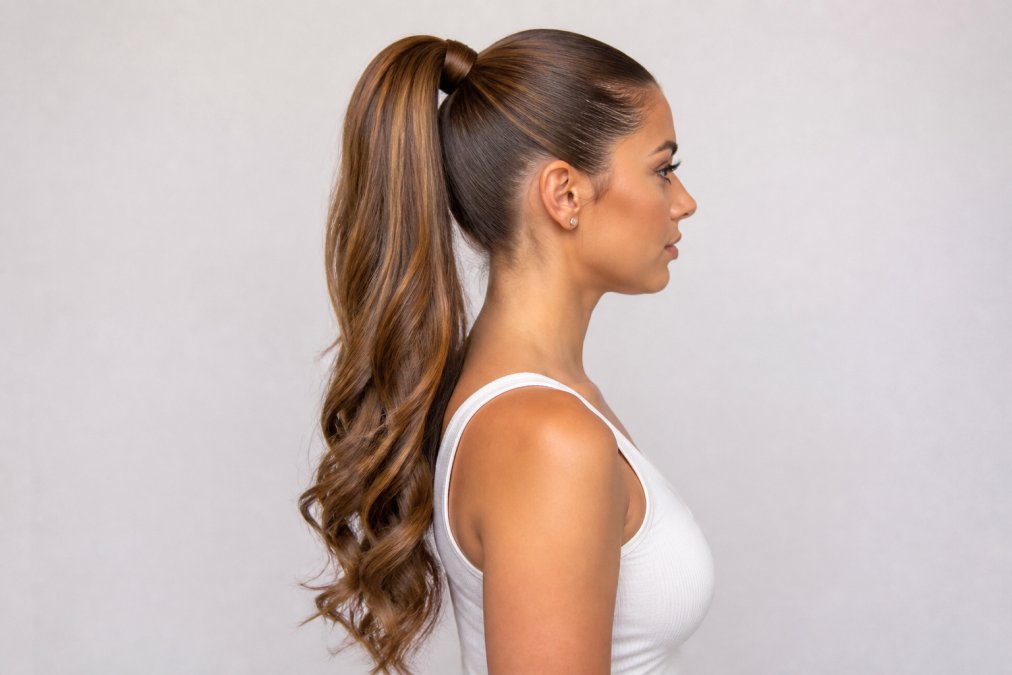
- Secure the Base: Gather your natural hair into a high ponytail at the crown. Secure it tightly with a strong hair-tie. This is your anchor, so it must be secure.
- Backcomb the Crown: Gently tease the hair at the crown before securing the tie to add volume. This prevents the "flat top" look and helps hide the base of the extension.
- Attach the Extension: If using a clip-in ponytail piece, open the clip and snap it securely around your natural ponytail base. If using wefts, wrap them around the base and pin them in place with bobby-pins.
- Wrap a Strand: Take a small section of hair from the underside of your ponytail and wrap it around the base to cover the elastic and the attachment point. Secure the end with a bobby-pin.
The Wrap-Around Trick for a Polished Base
The wrap-around is the difference between a DIY look and a salon finish. Take a one-inch section of hair from the bottom of your natural ponytail. Wrap it tightly around the hair-tie and the top of the extension weft, completely covering the elastic.
Secure the end of the wrapped strand by tucking it under the wrapped hair and pinning it horizontally with a bobby-pin. This hides the mechanics of the style and prevents the hair-tie from slipping. For extra hold, apply a small amount of hair-spray to the wrapped section to keep flyaways at bay.
Blending Your Natural Hair with the Extension
Blending is where the quality of the hair matters most. If you are using 100% human hair, the texture should match your natural hair closely. After securing the extension, take a smoothing-brush and gently brush the entire ponytail together to merge the natural hair and the weft.
If you have curly or textured hair, you may need to curl the entire ponytail with a wand to unify the pattern. For sleek styles, use a flat iron on a low heat setting to ensure the natural hair and the extension reflect light identically. The goal is that no one can see where your hair ends and the extension begins.
| Step | Action | Key Tool | Duration |
|---|---|---|---|
| 1. Prep | Smooth hair back with styling cream | Bristle brush | 2 minutes |
| 2. Secure | Tie natural hair at the crown | Strong hair-tie | 1 minute |
| 3. Attach | Clip or pin the extension at the base | Bobby-pins | 3 minutes |
| 4. Conceal | Wrap a strand around the base | Hair-spray | 1 minute |
| 5. Blend | Brush and heat-style the length | Smoothing-brush | 5 minutes |
Best Hair Ties for Extensions That Prevent Damage
Choosing the best hair ties for extensions is about protecting your investment. The wrong elastic can snag the wefts, cause frizz, or pull on your natural roots. Avoid ties with metal joins, as these catch and rip the hair cuticle.
Look for spiral ties or silk-covered elastics that grip without creasing. For heavy extensions, a thick, fabric-covered elastic band provides the most support without cutting into the hair. For wefts that are pinned, you need a tie that holds firmly without slipping.
How to Prevent Hair Extension Tangling After Styling
Tangling in a high ponytail rarely starts at the ends, it starts at the nape of the neck, where the ponytail rubs against collarbones, coat collars, and scarf fabric. This friction creates micro-kinks that migrate upward as the day progresses. Understanding this mechanism changes how you prevent tangling.
The Nape Protection Protocol
Before you leave the house, take a one-inch section from the underside of the ponytail and apply a silicone-based serum (look for dimethicone or cyclopentasiloxane as the first ingredient) from the mid-lengths to the ends. Silicones coat the cuticle and reduce friction between strands, the single most effective way to prevent matting. Apply more generously to the bottom third of the ponytail, the zone that rubs against clothing.
Brushing Mechanics That Matter
Always brush from the bottom up, holding the ponytail at the base with your other hand. This relieves tension on the scalp and prevents the brush from pulling the wefts loose. The brush type matters as much as the technique:
- Wet brush or wide-tooth comb for detangling after washing, never a fine-tooth comb on wet extensions.
- Boar-bristle brush for daily smoothing, it distributes natural oils from the scalp down the shaft, which is impossible with synthetic brushes.
- Detangling brush with flexible nylon bristles for mid-day touch-ups, these glide through knots without snapping the hair.
The 8-Hour Rule for Product Buildup
Hairspray, dry shampoo, and styling creams accumulate on extension hair faster than on natural hair because extensions lack the scalp's natural oil distribution. After 8 hours of wear, this buildup makes the hair tacky, causing strands to stick together and tangle. For a full day of wear, carry a small spray bottle with water and a drop of leave-in conditioner. Mist the length lightly at the 4-hour mark and brush through to reactivate the product and prevent tacky buildup.
Night Care That Prevents Morning Tangles
At night, never sleep in a high ponytail without protection. The friction against a cotton pillowcase is the leading cause of extension matting. Two options work:
- The Loose Braid: Take the ponytail down, brush it thoroughly, and create a loose braid starting at the nape. Secure with a silk scrunchie, never a rubber band. This prevents the hair from rubbing against itself while you sleep.
- The Silk Wrap: If you want to preserve the ponytail for a second day, wrap the entire ponytail in a silk scarf and tie it loosely at the nape. This creates a barrier between the hair and the pillowcase.
Human Hair vs. Synthetic: Different Rules
If you are wearing 100% human hair extensions, the cuticle is intact and responds to oil-based products. A drop of argan or bonding oil on the mid-lengths and ends before brushing will keep the cuticle flat and prevent tangling. For synthetic or heat-friendly synthetic hair, oil-based products are counterproductive, they coat the fiber and attract dust, accelerating tangling. Use only water-based detanglers and silicone sprays.
The Matting Emergency Protocol
If matting has already occurred at the nape, do not pull a brush through it. This will permanently fuse the strands. Instead:
- Apply a generous amount of silicone-based detangler to the matted area.
- Let it sit for 5 minutes to penetrate the tangle.
- Use your fingers to gently separate the strands, working from the outside of the mat inward.
- Once the mat is loosened, brush from the bottom up with a wide-tooth comb.
When to Wash
Extensions in a high ponytail accumulate product and environmental debris faster than loose hair because the style traps everything against the shaft. Wash your extensions every 7 to 10 wears, or immediately if the hair feels sticky or heavy. Use a sulfate-free shampoo and condition from the mid-lengths down, never at the roots where the wefts are attached.
Troubleshooting: Visible Tracks, Slipping, and Tension
Even with perfect technique, issues arise. Here is how to fix the three most common problems with a high ponytail.
Visible Tracks: If you can see the wefts, the ponytail is likely too high or the hair is pulled too tightly. Loosen the base slightly and re-tease the crown to create more coverage. If the tracks are still visible, move the ponytail base down an inch.
Slipping: If the ponytail slides down during the day, the anchor is weak. You need a tighter hair-tie at the base, or you need to pin the extension directly to the underlying natural hair with bobby-pins crossed in an "X" pattern. For clip-in pieces, ensure the clip has snapped shut completely and is gripping hair, not just sliding over it.
Tension and Pain: This is a non-negotiable signal that something is wrong. If the style pulls at your hairline or causes a headache, take it down immediately. Chronic tension can lead to traction alopecia. The style should feel secure but comfortable, allowing your scalp to move freely.
Conclusion: Rock Your High Pony with Confidence
Styling hair extensions high ponytail is a skill that combines technical placement with an eye for natural movement. The difference between a style that looks "done" and one that looks natural comes down to preparation, tension management, and the quality of the hair itself. When you start with 100% human hair that matches your texture and color, the blending becomes effortless.
At Millionaire Beauty Brand Extensions, we understand that versatility is the reason you invested in extensions. Our luxury ponytail pieces are designed to be styled, washed, and curled without compromising hair integrity. With 40+ shades available, you can find a perfect match that disappears into your natural hair. Whether you are prepping for a special occasion or want an everyday elevated look, a high ponytail should be a reliable option in your styling arsenal.

Frequently Asked Questions
Can I put my hair in a high ponytail if I have extensions?
Yes, you can wear a high ponytail with most extension types, including clip-ins, tape-ins, and wefts. The key is to secure your natural hair first and position the ponytail where you want it before attaching the extension. For clip-ins, ensure the clips are anchored close to the base of your ponytail. For wefts, wrap them around the base and secure them with bobby pins. This method keeps the tracks hidden and prevents tension on your scalp.
How do you hide the weft when wearing a high ponytail with extensions?
The most effective way to hide wefts is to wrap a small section of your natural hair around the base of the ponytail. After securing your hair tie, take a 1-inch section from the underside, wrap it around the tie to cover the weft or clips, and pin the end securely underneath. This creates a seamless, polished base. Using a smoothing brush and a bit of styling cream helps keep flyaways down for a flawless finish.
What are the best hair ties for extensions to prevent breakage?
Spiral hair ties or velvet scrunchies are the best choices for hair extensions. Traditional elastic bands grip too tightly and can cause friction, leading to tangling and breakage at the anchor point. Spiral ties provide a secure hold without creasing or pulling on the wefts or your natural hair. When styling a high ponytail, use a tie that is gentle but strong enough to support the weight of the extension without slipping.
How can I prevent my hair extensions from tangling in a ponytail?
Prevent tangling by keeping your extensions moisturized and detangled. Before styling, apply a lightweight, leave-in conditioner or hair oil to the mid-lengths and ends. Always use a heat protectant before curling or straightening. At night, braid the ponytail or wrap it in a silk scarf to reduce friction. Regular brushing with a loop brush, starting from the ends and working up, also minimizes knots and maintains the hair's integrity.
Getting the sleek, seamless high ponytail you want starts with hair that behaves like your own. Explore the ponytail extension collection from Millionaire Beauty Brand Extensions to find a shade that blends flawlessly and holds up to repeated styling. Get started today and wear your high pony with confidence.